Wednesday, April 1, 2015

Chizuk Emunah (Pt 2) Under the Microscope: Chapter 51

John 10:33-36, "The Jews answered him [Jesus], For a good work we stone thee not; but for blasphemy, and because that thou, being a man, makest thyself God.

"Jesus answered them. Is it not written in your law, I said ye are gods? If he called them gods unto whom the Word of God came, and the Scripture cannot be broken: say ye of him, whom the Father hath sanctified and sent into the world, Thou blasphemest, because I said, I am the Son of God"?

The equivocal reply of Jesus for styling himself God, argues more against than in favour of his claim. In quoting in his above defence the words of Psalm 82:6, "I have said, Ye are gods, and sons of the Most High altogether," he has not borne in mind that the psalmist spoke with the very purpose of showing that those who call themselves sons of God, betray by their own nature that they delude themselves and others; for he goes on to say, "But surely ye die like other men, and fall like any one of the princes." The occurrence of the word Elohim (gods), does not even show that the Divine Being is really alluded to. We have instances that both angels and judges are designated by that term, and that it is equal to the expression of higher powers or authorities. See Judges 13:22, "We must die, for we have seen an 'Elohim'" (a superior being). In Exodus 22:9, we read, "The cause of both men shall come before the Elohim" (the judicial authorities), and whom those Elohim find guilty, "he shall pay a double portion to his neighbour." Similar use is made of the word Elohim in various places of our Scriptures. In Psalm 82:1, the word gods [Elohim] has the same signification as angels and messengers of the Almighty.

When God said to Moses, "Behold I have made thee a god unto Pharaoh," He spoke merely of him as of a messenger who came in the name of the Most High. The misquoted passages abounding in the New Testament betray the scanty and superficial knowledge its authors possessed of the language and purport of our Holy Scripture.

Then why did this crowd accuse him of blasphemy? Psalm 82 does describe mere humans as gods. It is a short psalm that goes as follows:
Rescue the Weak and Needy
A Psalm of Asaph.

God has taken his place in the divine council;
in the midst of the gods he holds judgment:
“How long will you judge unjustly and show partiality to the wicked? Selah
 Give justice to the weak and the fatherless; maintain the right of the afflicted and the destitute. Rescue the weak and the needy; deliver them from the hand of the wicked.”
They have neither knowledge nor understanding, they walk about in darkness;
all the foundations of the earth are shaken.
 I said, “You are gods, sons of the Most High, all of you;
 nevertheless, like men you shall die, and fall like any prince.”
Arise, O God, judge the earth; for you shall inherit all the nations!
 (Psalm 82)
The Mormons have difficulty with this passage, since these so-called gods are mortal. It also fits with the context that God shall judge all of the land, indicating that the inhabitants to be judged are earthly, rather than heavenly creatures.

Remember also the distinction that I have made:
(LORD or Lord or Yahweh = κυριος = יהוה)
(God = ο θεος = אלהים)

Elohim, is the word translated as theos, or as God. As Troki demonstrates, that word does not necessarily mean the all-powerful creator of the world, but can mean powerful beings, spirits, angels, and even human judges. This is why the New Testament writers used the term κυριος which translates as Lord.

And even Korach never accused Moses of making himself God.

Tuesday, March 3, 2015

Chizuk Emunah (Pt 2) Under the Microscope: Chapter 50

John 10:30, "I [Jesus] and my Father are one." According to the opinion prevailing among the Christians, Jesus declared in these words his perfect identity with the Godhead; but we have already noticed a passage which completely refutes this view. For we find in Mark 13:32, "But of that day and that hour knoweth no man, no, not the angels which are in heaven, neither the son, but the Father." Every attempt to reconcile the two contradictory verses, only leads to new perplexities. The more we examine into the purport of the New Testament, the more clearly we perceive its general tenor is not to deify Jesus; and that the doctrines which assign to him the title of God, have arisen from want of due investigation, and are not upheld by the force of sound argument. 

So now, Troki quotes a New Testament verse and doesn't even criticize it. He goes to Mark 13, which I already discussed in Chapter 31.

But let's not waste the post. A. Lukyn Williams has some interesting commentary on this.
He brings forward a more serious argument by saying, on the authority of a Socinian writer, Martin Czechowitz, who died in 1608, that Jesus' words do not necessarily mean that the Father and the Son are of one essence, for St. Paul writes in 1 Corinthians 3:8: "Now he that planteth [St. Paul] and he that watereth [Apollos] are one," which does not mean that St. Paul and Apollos were one man, but only that they worked together with the same aim and purpose. What have we Christians to say in reply? This, that no one ever supposed that our Lord's words in themselves necessarily conveyed the usual Christian interpretation of them, but that when they are considered in their context they do necessarily convey it. For read the passage. In verse 28 Jesus said: "I give unto them eternal life; and they shall never perish, and no one is able to snatch them out of my hand." Then in verse 29: "My Father, which hath given them unto me, is greater than all; and no one is able to snatch them out of the Father's hand." There we have similarity, and, as it would seem, equality of infinite power, predicated of both the Father and the Son. Can beings possess equality of infinite power and yet be distinct in essence?
Further, how did they who listened to our Lord understand Him? This at least is certain. For the Jews were so furious with Him that they took up stones to cast at Him, and when He asked the reason, they replied, "For blasphemy; and because that thou, being a man, makest thyself God." To them His meaning was quite clear; by saying "I and the Father are one "He claimed to be God, in the highest possible sense of the term. Yet, as the words are recorded for us in the Greek, there are two points which ought not to be overlooked. First, the word "one" is in the neuter gender, not the masculine. Our Lord does not, that is to say, mean that He is identical in personality (for want of a better term) with the Father, but that He is one in essence with Him. Secondly, that along with this unity He and the Father remain distinct; He says "are," not "am." He claims, while remaining other than the Father, to be of one essence with Him. 
James White said it well when he interpreted this verse as, "Jesus and the Father are one in their mission to redeem humanity." The opponents of Jesus were right to accuse him of claiming a divine prerogative. Williams goes a little far in stating that Jesus is claiming a divine essence, when he is really claiming a divine function, and one that God does not delegate to any creature, no matter how exalted.

Sunday, March 1, 2015

Chizuk Emunah (Pt 2) Under the Microscope: Chapter 49

John 10:16, "And other sheep I [Jesus] have, which are not of this fold; them also I must bring, and they shall hear my voice, and there shall be one fold and one shepherd."

The truth which is contained in this passage has no reference to himself, for the union of faith was not accomplished by him, and will only take place at a future period, when the proper time shall arrive. This is testified by the following passages of Scripture. Isaiah, in chapter 45:23, says, "Thus I have sworn by myself, the word is gone out of my mouth in righteousness, and shall not return. For unto me every knee, shall bow, and every tongue shall swear." Zephaniah 3:9, "For then will I turn to the people a pure language, that they may all call upon the name of the Lord, to serve Him with one consent." The predominance of Judaism over all the religions of the Gentiles is dwelt on in the following extracts from the prophets: Isaiah 52:1, "Awake, awake, put on thy strength, Zion; put on thy beautiful garments, Jerusalem, the Holy City; for henceforth there shall no more come unto thee, the uncircumcised and the unclean." Ibid. chapter 66:23, "And it shall come to pass, that from one new moon to another, and from one Sabbath to another, shall all flesh come to worship before me, saith the Lord." Zechariah 14:16, "And it shall come to pass, that every one that is left of all the nations which came against Jerusalem shall even go up from year to year to worship the King, the Lord of Hosts, and to keep the feast of tabernacles." As to the attribution of the sovereignty of empires to the future King Messiah, we find in Daniel 2:44, "And in the days of these kings shall the God of Heaven set up a kingdom which shall never be destroyed, and the kingdom shall not be left to other people; but it shall break in pieces and consume all those kingdoms, and it shall stand for ever."

Ibid. 7:27, "And the kingdom and the dominion, and the greatness of dominion under the whole heaven, shall be given to the people of the saints of the Most High, whose kingdom is an everlasting kingdom, and all the dominions shall serve and obey Him." Numbers 24:17, "I see it [it will not happen] now, I behold it, but not nigh; there shall come a star out of Jacob, and a sceptre shall rise out of Judah, and he shall smite the corners of Moab, and overthrow the children of Sheth." 
 Again, it's hard to pick out an actual argument in this chapter. If Troki is arguing that we are still waiting for the prophecies at the end of the world to be fulfilled, I would agree with him that this is the case. Israel is not yet in a position of dominance. One has to twist and even waterboard the Scriptures to support the desperate position that these prophecies have already been fulfilled.

What follows from this? That Jesus is not Messiah? Troki's argument seems to go like the following:

1. If Jesus did not fulfill the Messianic prophecies, then he is not Messiah
2. Jesus did not fulfill the prophecies
3. Therefore, Jesus is not Messiah

What support is there for premise 1? In order to keep the argument from appearing ad hoc, one would need to generalize the premise into:

1'. For any person x, if x did not fulfill the Messianic prophecies, then x is not Messiah

(1') has immediately obvious difficulties. Since the Messianic prophecies are not fulfilled (1') would disqualify everyone alive today from being Messiah. In fact, it would mean that no one could be Messiah until after the prophecies are fulfilled. But that's certainly wrong. Rabbi Yochanan ben Zakkai said "If you are holding a sapling in your hand and someone tells you, ‘Come quickly, the messiah is here!’, first finish planting the tree and then go to greet the Messiah.’" This implies that Messiah will be here before the prophecies are finished. Otherwise, there wouldn't be the surprise.

So we will need to change the premise to:
1''. For any person x, if x died before the Messianic prophecies were fulfilled, then x is not Messiah

The problem is that rabbinic tradition does not agree with this, either. The rabbis of the Talmud discuss the two different pictures of Messiah as presented in the Bible. One picture features a triumphant leader, while the other presents a suffering servant who will die for the sake of Israel. The Talmud claims that this is because there are two different people called Messiah, and at least one of them will die.

So we then need to change the premise to:

1'''. For any person x, if x died before the Messianic prophecies were fulfilled, then x is not Messiah son of David

This is more defensible, yet Maimonedes believed that Isaiah 53 referred to Messiah son of David, which includes the passage "he was cut off from the land of the living, stricken for the transgression of my people. And they made his grave with the wicked, and with a rich man in his death."

So rabbinic tradition itself does not substantiate any of these claims. We have no reason to accept (1), and plenty of good reasons to reject it.

Friday, February 27, 2015

Chizuk Emunah (Pt 2) Under the Microscope: Chapter 48

John 8:40, "But now ye seek to kill me, a man that hath told you the truth which I have heard of God." If he had been identical with God, he would not have told the Jews that he had received his revelation from God. The truth proceeds from his own mouth, that he was not a Deity incarnate. What the opinion of his disciples was regarding this Divinity subsequently attributed to him, is sufficiently manifest, in spite of the many obscure expressions that occur in the New Testament; for instance, Paul says plainly, in his epistle to the Romans, chapter 5:15, "The gift of grace which is by One Man, Jesus Christ, hath abounded unto many." In every part of the New Testament where Jesus speaks of himself, he represents himself as the Son of Man, and not as God.

Again, Troki betrays his ignorance of how the Greek Bible uses the terms of Lord and God. The Septuagint, which was written around 250 B.C.E. had translations for the terms which were borrowed by the New Testament writers.

A refresher:

(LORD or Lord or Yahweh = κυριος = יהוה)
(God = ο θεος = אלהים)

This can be seen in the translations of the Shema (Deuteronomy 6:4)
שְׁמַ֖ע יִשְׂרָאֵ֑ל יְהוָ֥ה אֱלֹהֵ֖ינוּ יְהוָ֥ה אֶחָֽד

ἄκουε Ισραηλ κύριος ὁ θεὸς ἡμῶν κύριος εἷς ἐστιν

Hear, Israel, Yahweh our God, Yahweh one.

When reading the English, or even the Greek New Testament, one might think that the term "God" was the more exalted term while the term "Lord" was one of less exaltation. Once we realize how the Septuagint translators selected from the Greek language, the picture changes. The term "God" is equivalent to the term "Elohim" which can mean God, gods, spirits, or even mighty human judges. The term Lord, on the other hand, is equivalent to the four-letter name of God, and is used only of the Creator of the Universe.

Of course the New Testament authors never denied that Jesus was man as well as God, or that Jesus was distinct from the Father.

For further reading:
Jesus as God: Clearing the Ground
Jesus as God: A Biblical Case

Friday, February 13, 2015

Chizuk Emunah (Pt 2) Under the Microscope: Chapter 47

John 8:3-5, 7, "And the scribes and Pharisees brought unto him a woman taken in adultery; and when they had set her in the midst, they said unto him, Master, this woman was taken in adultery, in the very act. Now Moses, in the law, commanded us that such should be stoned. But what sayest thou? And he said unto them, He that is without sin among you, let him first cast a stone at her." And he said to the woman (verse 11), "Neither do I condemn thee; go, and sin no more." The laxity of this sentence is not only opposed to the Mosaic injunction, (Deut 22:22) "Thou shalt remove the evil from the midst of thee": but it is also practically disavowed by the Christian legislation, according to which, the adulteress is subjected to the severest rigour of the law, on account of the injury it would necessarily occasion to the happiness of society. 

In this section, Troki is quoting a part of the Bible that does not appear in the earliest manuscripts. The event may be historical and added in as a marginal note. Troki's argument in this section is that Jesus made a lax legal decision and one that opposes Jewish law.

The problem with Troki's argument is that it assumes Jesus was in fact making a legal decision, and it does not seem obvious that he was. In several cases, the opponents of Jesus wanted to trap him in a double bind. Consider when they asked him whether or not it was legal to pay taxes to Caesar. If he said that it was, then he is a traitor to the Jewish people, who did not believe in having an image on their money. If he said that it was not, then he could be labeled a traitor to the Roman Empire.

According to the Talmud, the Jewish authorities lost the right to capital punishment around the year 30. According to Josephus in book 20 of his Antiquities, the Roman procurator was needed to conduct capital punishment, meaning that the right of the Jewish courts to execute people was severely curbed around the year 6, when Judea became a Roman province.

It would have been very dangerous for any Jewish court to execute someone. If the Romans found out and took offense, they could retaliate. This passage is another example of a situation where the Jewish law and Roman law came into conflict, and someone who made a definite decision was in a double bind. As usual, Jesus noticed that this was not a legal accusation, since under Jewish law, one needs two witnesses who are interrogated separately. Jesus, being as clever as he was, found a way to escape the situation.

Friday, January 30, 2015

Chizuk Emunah (Pt 2) Under the Microscope: Chapter 46

John 7:15, "And the Jews marvelled, saying. How knoweth this man letters, having never learned?"

Talmudical tradition informs us that he had a teacher, who was named R. Joshua Ben Perachiah, and that master and scholar had fled into Egypt to escape the persecution of King Janai.

There is a bit of irony that Troki, a Karaite, would quote rabbinic tradition to argue against the reliability of the book of John. Troki quotes a tradition found in two places in the Talmud, Sotah 47a and Sanhedrin 107b, but only in the uncensored edition.

Here is the text of Sotah:
What was the incident with R. Joshua b. Perahiah? — When King Jannaeus put the Rabbis to death, Simeon b. Shetah was hid by his sister, whilst R. Joshua b. Perahiah fled to Alexandria in Egypt. When there was peace, Simeon b. Shetah sent [this message to him]: 'From me, Jerusalem, the Holy city, to thee Alexandria in Egypt. O my sister, my husband dwelleth in thy midst and I abide desolate'. [R. Joshua] arose and came back and found himself in a certain inn where they paid him great respect. He said: 'How beautiful is this 'aksania'! One of his disciples said to him, 'My master, her eyes are narrow!' He replied to him, 'Wicked person! Is it with such thoughts that thou occupiest thyself!' He sent forth four hundred horns and excommunicated him. [The disciple] came before him on many occasions, saying 'Receive me'; but he refused to notice him. One day while [R. Joshua] was reciting the Shema, he came before him. His intention was to receive him and he made a sign to him with his hand, but the disciple thought he was repelling him. So he went and set up a brick and worshipped it. [R. Joshua] said to him, 'Repent'; but he answered him, 'Thus have I received from thee that whoever sinned and caused others to sin is deprived of the power of doing penitence'. A Master has said: The disciple practised magic and led Israel astray. 
The text of Sanhedrin is as follows:
What of R. Joshua b. Perahjah? — When King Jannai slew our Rabbis, R. Joshua b. Perahjah (and Jesus) fled to Alexandria of Egypt. On the resumption of peace, Simeon b. Shetach sent to him: 'From me, (Jerusalem) the holy city, to thee, Alexandria of Egypt (my sister). My husband dwelleth within thee and I am desolate.' He arose, went, and found himself in a certain inn, where great honour was shewn him. 'How beautiful is this Acsania!' (The word denotes both inn and innkeeper. R. Joshua used it in the first sense; the answer assumes the second to be meant.) Thereupon (Jesus) observed, 'Rabbi, her eyes are narrow.' 'Wretch,' he rebuked him, 'dost thou thus engage thyself.' He sounded four hundred trumpets and excommunicated him. He (Jesus) came before him many times pleading, 'Receive me!' But he would pay no heed to him. One day he (R. Joshua) was reciting the Shema', when Jesus came before him. He intended to receive him and made a sign to him. He (Jesus) thinking that it was to repel him, went, put up a brick, and worshipped it. 'Repent,' said he (R. Joshua) to him. He replied, 'I have thus learned from thee: He who sins and causes others to sin is not afforded the means of repentance.' And a Master has said, 'Jesus the Nazarene practised magic and led Israel astray.'
 It's more or less the same oral tradition, and is probably the source for the medieval story Toledot Jesu. One obvious point in the story is that Jesus is dated to the reign of Alexander Jannaeus, who lived from around 126 to 76 BCE. One might object that this passage cannot be about Jesus since the dating is about 100 years off. The problem is that the Gemara has other references to this oddly specific name "Jesus of Nazareth."

Consider Sanhedrin 43a
On the eve of the Passover Yeshu was hanged. For forty days before the execution took place, a herald went forth and cried, 'He is going forth to be stoned because he has practised sorcery and enticed Israel to apostacy. Any one who can say anything in his favour, let him come forward and plead on his behalf.' But since nothing was brought forward in his favour he was hanged on the eve of the Passover! — Ulla retorted: 'Do you suppose that he was one for whom a defence could be made? Was he not a Mesith [enticer], concerning whom Scripture says, Neither shalt thou spare, neither shalt thou conceal him? With Yeshu however it was different, for he was connected with the government [or royalty, i.e., influential].'

Our Rabbis taught: Yeshu had five disciples, Matthai, Nakai, Nezer, Buni and Todah. When Matthai was brought [before the court] he said to them [the judges], Shall Matthai be executed? Is it not written, Matthai [when] shall I come and appear before God. Thereupon they retorted; Yes, Matthai shall be executed, since it is written, When Matthai [when] shall [he] die and his name perish. When Nakai was brought in he said to them; Shall Nakai be executed? It is not written, Naki [the innocent] and the righteous slay thou not? Yes, was the answer, Nakai shall be executed, since it is written, in secret places does Naki [the innocent] slay. When Nezer was brought in, he said; Shall Nezer be executed? Is it not written, And Nezer [a twig] shall grow forth out of his roots. Yes, they said, Nezer shall be executed, since it is written, But thou art cast forth away from thy grave like Nezer [an abhorred offshoot]. When Buni was brought in, he said: Shall Buni be executed? Is it not written, Beni [my son], my first born? Yes, they said, Buni shall be executed, since it is written, Behold I will slay Bine-ka [thy son] thy first born. And when Todah was brought in, he said to them; Shall Todah be executed? Is it not written, A psalm for Todah [thanksgiving]? Yes, they answered, Todah shall be executed, since it is written, Whoso offereth the sacrifice of Todah [thanksgiving] honoured me.
Or Consider Gittin 57a from the uncensored Talmud.
He then went and raised Jesus the Nazarene by incantations. He asked them: Who is in repute in the other world? He replied: Israel. What about joining them? He replied: Seek their welfare, seek not their harm. Whoever touches them touches the apple of his eye. He said: What is your punishment? He replied: With boiling hot excrement, since a Master has said: Whoever mocks at the words of the Sages is punished with boiling hot excrement.
The censored version of the Talmud has "sinners of Israel" in place of Jesus. The Talmud does get the name right, and the description that this Jesus is of Nazareth is strong evidence that this is the same Jesus they are talking about. When someone includes a description with such oddly specific details but gets some of the information wrong, you don't conclude that they are talking about a different subject, but that their information is wrong in some of the details.

Jesus is included in much the same way that Moses is included in the Koran. The information is very late, and has all sorts of theological embellishment and errors. Nobody argues that because the Koran gets details about Moses wrong that therefore he is talking about a different Moses.

The problem with Troki's argument is that the book of John is demonstrably a very early source compared to books like the Gnostic Gospels and the Talmud.

The earliest fragment of John that exists to this day is called P52, a papyrus that dates no later than the year 120, and is from a translated copy of the book of John. This means that the book was widely distributed and translated by this time. Troki is asking us not to believe a source written less than 100 years after the events because of what is written in a source over 500 years after the events. That is simply not good historiography.

Saturday, December 27, 2014

Zionism on Wikipedia

For those of you who have been following my Wikipedia posts, you should be aware that Wikipedia is far from a neutral source of information, especially on controversial issues. Still, the public believes in Wikipedia as a neutral source of knowledge. This may be in part because most people do not have the time to read all of the pro and con arguments for every issue, and Wikipedia is both at the top of Google searches, and tends to give relevant information about a topic.

Ideologues have taken note about how Wikipedia sways public opinion, and have resorted to tactics on how to take it over. Susan Gerbic and her Guerilla Skeptics have been especially skilled at this, but they have not been the only group.
The nation of Israel has also noticed that Wikipedia sways public opinion, and has dedicated considerable time, effort, energy, and money toward helping Wikipedia reflect a pro-Zionist point of view. This effort has been overwhelmingly successful, as Wikipediocracy notes, despite that Zionism is a small minority view in the world.

Sam Lee of Wikipediocracy gives the following links in the article:
The right’s latest weapon: ‘Zionist editing’ on Wikipedia, Haaretz
Wikipedia Editing for Zionists, New York Times
Wikipedia editing courses launched by Zionist groups, The Guardian
Zionist Internet Struggle to Hit Wikipedia, Israel National News,
Wikipedia: A New Battleground in the Israeli-Palestinian Conflict, The Daily Beast
West Bank Settlers Take To Wikipedia, Haaretz
Aligning text to the right: Is a political organization editing Wikipedia to suit its interests? Haaretz

The effort has been so successful, that every single person in the Wikipedia category of Israeli Murdered Children is someone murdered by a Palestinian. But this isn't the only way that Zionist editors dominate the topic.
Besides creating articles about “Hamas people saying something stupid”, propagandists are also very active in every AfD (Article for Deletion) debate, making sure that articles about killed Palestinians get deleted. So we have Wikipedia:Articles for deletion/Rania Siam (T-H-L) (deleted); Rania Iyad Aram (T-H-L) (deleted); Wikipedia:Articles for deletion/Jihad Shaar (T-H-L) (deleted); and Wikipedia:Articles for deletion/Ghadeer Jaber Mkheemar (T-H-L) (deleted). Killed Palestinian children should remain faceless and nameless, and Wikipedia editors are here just continuing the censorship from elsewhere; see this Guardian article: Israel bans radio advert listing names of children killed in Gaza (and here is a link to the B’Tselem press release.)

The co-founder of Wikipedia claims that ”every Wikipedia editor has a responsibility to try to be neutral”, and that “the community” enforces this. Anyone with a familiarity with the Israel/Palestine area on Wikipedia knows that this is complete rubbish. Over at Wikipedia:Arbitration/Requests/Enforcement (T-H-L) it is taken for granted that editors are there to promote their POV (point of view), rather than to seek neutrality.

Jimmy Wales has an almost religious conviction that “crowd-sourcing” works, even for contentious subjects. The reality on the ground shows he might just as well believe in magic pixies, spreading their magic pixie dust all over Wikipedia, making it an objective reflection of the world.
The New York Times mentions:
The Yesha Council also announced a prize for the “Best Zionist Editor” — the person who over the next four years incorporates the most “Zionist” changes in the encyclopedia. That lucky encyclopedist will receive a trip in a hot-air balloon over Israel.
This is impressive. Unlike many people who cover these events, I am in full support of what they are doing. Naftali Bennett and the Yesha Council seem to have a clear view of the situation. They recognize that people form their opinions on issues based on the information that they receive. Control the information channels (which include education, news, and entertainment) used by the mainstream, general public (rather than just your internal group), and you control what the public believes. Bennett is willing to accept and embrace that fact. Christian Evangelicals take note: This is how you win a culture war.

I encourage Messianic Jews and Christian Zionists to help out with this effort. Wikipedia is mob-sourced, so if you get a bigger mob on an article, you can take control of that article. Israel is still beleaguered and needs your help to cut through the Palestinian propaganda. I noticed this when I visited England. Anti-Zionist activists were present at many of the tourist areas, engaging people and handing out their literature. Zionists were nowhere to be found. For the sake of Israel, we need to fix this.

I also hope that if you are a Messianic Jew, or even a Christian sympathetic toward Messianic Judaism, that you consider registering for a Wikipedia account, and take the time to learn how to edit. Google is tremendously helpful in this regard. The easiest articles for you to improve are the ones related to key Messianic Jewish figures and organizations. There is a lot of room for more information, and very little resistance. As your ranks build, you can then take on articles such as the article on Messianic Judaism proper, and help give that a more positive slant.

Postscript
I also forgot to mention one of  the key factors to remember: Wikipedia editing is an activity for marathoners, not for sprinters. I can recall three pages off the top of my head (Theodore Beale, Burzynski Clinic, and Rupert Sheldrake) where someone called for their readers to fix a biased Wikipedia page. What happened is that a whole bunch of new editors and editors without Wikipedia accounts rushed in and made changes. The experienced editors called in the administrators and locked the page down in its previous state. Within a couple of weeks, the administrator unlocked the page, at which time the torrent of editors had faded away.

If you want to make a difference, you need to be in it for the long haul. Get an account and build some credibility by editing a variety of pages. Once you get 50 edits or so, on a variety of pages (no matter how trivial the edits), your voice will actually be counted in determining consensus on a page. It generally takes a while to make lasting edits, because controversial edits need to be discussed on the talk page first. Consensus is determined by which position has the majority of people arguing for it. But to get counted, you usually need to have some sort of a track record.

Thursday, December 18, 2014

Chizuk Emunah (Pt 2) Under the Microscope: Chapter 45

John 7:5, "For neither did his brethren believe in him." If his own brothers, men of the same flesh and blood, and the nearest judges of the powers attributed to him, felt no inducement to admit his pretensions; surely we Jews may be excused for discrediting what his own contemporaries and brothers rejected as incredible. 
 I have dealt with this objection earlier. The mother and brothers of Jesus did have their doubts about him. As Troki points out, this information is embarrassing to those who preached the name of Jesus, since opponents of the movement undoubtedly used this fact to argue against them. This gives us even more reason to believe that such information was not invented by the followers of Jesus, but is historically accurate.

James, who was Jesus' own brother, did not believe until after the resurrection, until Jesus appeared to him. The church marks James the brother of Jesus as the early bishop of Jerusalem, and his death during a lapse in the Roman government is corroborated by the writings of Josephus. James went to his death proclaiming the supremacy of his own brother as God incarnate. Many of us have brothers. What kind of evidence would it take for you to believe that your own brother is God in the flesh? That is the kind of evidence that James and Paul received.

Monday, December 15, 2014

Evolution Before Darwin


Common knowledge tells us that creationism was the universally accepted belief before Charles Darwin came along and set the record straight. In fact, theories of evolution have been around since the very ancient world, and were part of pantheistic religions like that of ancient India.

Arguments for modern evolutionary theory trade on an equivocation: the fact that species change over time has never been disputed. Children are not identical to their parents. Yet, evolution, as described by people like Kenneth Miller, Richard Dawkins, Michael Ruse, and others is a process where nature brought about the complete diversity of life through the process of change over time. The strength of this hypothesis depends on whether you are open to supernatural explanations for the diversity of life or not. If not (and the theistic evolution movement is not), then modern evolutionary theory follows trivially. If you are open to such explanations, then modern evolution has very little going for it.

The push for acceptance of evolutionary biology is a political one. The acceptance of evolutionary biology, or even the existence of an old earth, is irrelevant to 99% of occupations. You generally don't care whether your auto mechanic believes in a 6,000 year old earth or a 4 billion year old earth. Proponents know that if they can establish modern evolutionary biology, it undermines our confidence in human uniqueness and in doctrines such as the inerrancy of the Bible, and in sex as a divinely designed activity. Acceptance of modern evolutionary biology increases society's acceptance that sex, marriage, and procreation can be separated into separate decisions, a goal of the sexual revolution movement. This is why evolution is so ardently pushed into public schools and to information storehouses such as Wikipedia. Do a search for Susan Gerbic to discover how secularists manipulate Wikipedia to serve their political ends.

Sunday, December 14, 2014

Chizuk Emunah (Pt 2) Under the Microscope: Chapter 44

John 6:38, "For I [viz., Jesus], came down from heaven not to do mine own will, but the will of Him that sent me."

If Jesus alludes here to the descent of his soul to the earth, in order to inhabit the body, then he has pronounced a common-place doctrine, for every human body is possessed of a soul; but if he meant that he descended from heaven in flesh, then the assertion is at variance with the other accounts, according to which he was born of a woman in Bethlehem, in a manger. See Luke 2:7. Moreover, we see here an acknowledgment of the all-important fact of his non-identity with the Godhead, as he professed to be only the agent of Him who sent him. 
This is another objection that is hard to understand. John is referring to the idea of Jesus becoming incarnate, just as Paul states in Philippians 2.
Have this mind among yourselves, which is yours in Christ Jesus, who, though he was in the form of God, did not count equality with God a thing to be grasped, but emptied himself, by taking the form of a servant, being born in the likeness of men. And being found in human form, he humbled himself by becoming obedient to the point of death, even death on a cross. Therefore God has highly exalted him and bestowed on him the name that is above every name, so that at the name of Jesus every knee should bow, in heaven and on earth and under the earth, and every tongue confess that Jesus Christ is Lord, to the glory of God the Father. (Philippians 2:5-11 ) 
 Ancient Israel spoke about cosmology in terms of a layered system. At the bottom, was the depths of hell. Above it is the world where we live. Above that is the first heaven, also known as the sky or the atmosphere. Above that is the second heaven, or outer space. Above that is the throne of God.

This is what John means by descent. Jesus, who was in the form of God, did not consider his equality with the Father as something to be grasped, or to be held onto at all costs. Instead, he gave up this glorious position by taking on the form of a servant. He came down from the throne of heaven and became incarnate. While in this state Jesus was dependent on the Father in order to know what to do. The Father was in a better position in heaven than Jesus was on earth, given his self-limited knowledge.

This, like many of Troki's objections, requires that one not understand the models of the divine trinity or of the incarnation of Jesus. Once those are understood, many of Troki's objections evaporate.

In fact, Maimonedes gave support to the coherence of trinitarian monotheism when he responded to Hippocrates' claim that we have three souls.
Know that the human soul is one, but that it has many diversified activities. Some of these activities have, indeed, been called souls, which has given rise to the opinion that man has many souls, as was the belief of the physicians, with the result that the most distinguished of them states in the introduction of his book that there are three souls, the physical, the vital, and the psychical. These activities are called faculties and parts, so that the phrase “parts of the soul,” frequently employed by philosophers, is commonly used. By the word “parts”, however, they do not intend to imply that the soul is divided into parts as are bodies, but they merely enumerate the different activities of the soul as being parts of a whole, the union of which makes up the soul. (from Shmoneh Parkim)
 Maimonedes is arguing that the soul has different activities, and through those activities has a complex unity.

Saturday, December 13, 2014

Chizuk Emunah (Pt 2) Under the Microscope: Chapter 43

John 2:18-20, "Then answered the Jews, and said unto him [viz., to Jesus], What sign showest thou unto us, seeing that thou doest these things? Jesus answered and said unto them. Destroy this temple, and in three days I will raise it up. Then said the Jews, Forty and six years was this temple in building, and wilt thou rear it up in three days?"

Could Jesus prove his divine character by thus advising the Jews to lay a sacrilegious hand on the sacred edifice? And, moreover, it was most unreasonable to ask that the Jews, who did not believe in his divine power, should commit an action that should consign the temple to everlasting destruction, merely for the sake of testing the reality of his character. 
Troki quotes John 2, but does not quote the whole passage. As John narrates
So the Jews said to him, “What sign do you show us for doing these things?” Jesus answered them, “Destroy this temple, and in three days I will raise it up.” The Jews then said, “It has taken forty-six years to build this temple, and will you raise it up in three days?” But he was speaking about the temple of his body. When therefore he was raised from the dead, his disciples remembered that he had said this, and they believed the Scripture and the word that Jesus had spoken.
(John 2:18-22) 
John has a habit of rewriting all the dialogue in the style of his own narration, so little in the book of John is a direct quotation of anyone. John is filled with figurative language, telling Nicodemus to be born again, calling himself the door, telling a Samaritan woman that his living water will permanently quench thirst, and telling the crowds to eat his flesh and drink his blood.  People mistook him, and Jesus did not correct them.

The timing of the temple has also been the subject of controversy. Josephus claims that the temple took 8 years to rebuild, or 1.5 years, depending on whether you use book 15 or book 16 of Antiquities as your source. This only refers to the inner cloisters of the temple. Josephus tells us later that the temple was finished in the year 64 under Albinus. According to the Jewish War by Josephus, the renovations began around the year 20 B.C.E. meaning that Jesus gave this statement approximately in the year 26.

Sunday, December 7, 2014

David Wood's Testimony

This is one of the most disturbing testimonies that I have ever heard. David Wood is a sociopath, incapable of feeling empathy toward anyone, and using his atheism to justify his behavior. In this story, Wood explains not only how he came to belief in God, but why he came to belief in Jesus as well.


Sunday, November 16, 2014

Why Empiricism is Bankrupt

Epistemology is the branch of philosophy that deals with how we know things. Two rival schools in the field of epistemology are rationalism and empiricism. The former states that we have certain ideas hard-wired into us wholly apart from our sense experience. The latter states that there is nothing in the intellect that is not first in the senses. Modern psychology, especially infant studies, provides very strong support for the position that some of our ideas are hard-wired into us, since infants in those studies have knowledge of things they could not possibly have obtained through sense experience. I may discuss these in another post. For now, let's stick to purely philosophical arguments.

Greg Bahnsen has already showed that atheistic empiricism cannot account for most of what we consider knowledge, and I covered his argument pretty well in Atheism and the Problem of Knowledge. Edward John Carnell has a series of arguments against theistic empiricism.

Innate Knowledge
Empiricist theologians such as Thomas Aquinas and Maimonedes argued that we do not have innate knowledge. Everything that we know begins in sense experience. The empiricist cannot know that knowledge of the past gives us knowledge about the future. The theistic empiricist has that difficulty plus the problem of how we can possibly have knowledge of God, who is not perceived by the senses.

To an empiricist, all concepts must come from experience, but all that experience tells us is what is not God. If we do not have innate knowledge of God, then we cannot know the essence of God.

Problem of Predication
When we take a look at what sense perception delivers to us, the problem gets worse. All concepts are useless when applied to God, for God occupies a different realm of being than the world of sense experience. On empiricism, our concepts cannot apply univocally to God.

This would lead us to conclude that a proposition about a creature necessarily loses all meaning when applied to God. It follows from such a principle that if we take our starting point from the world of sense experience, we can know nothing of God nor prove anything concerning him without continual equivocations.

Negative Theology
Might we not come to God by way of negation? Can we build a theology using only negations such as "God is not ignorant" and "God is not mortal"? Such an endeavor cannot be sufficient to know anything about God. We must know God to be able to say that he is not this or that. How could we tell him from this or that if we did not first know him? To say that a piano is not a banana is to give us no clues as to what a piano has which separates it from all other things which are also not bananas.

For example, we know that a piano is not a banana, but that does not distinguish it from a yacht, which is also not a banana. We need more than negation to help us. Negative theology alone leads to skepticism and agnosticism.

Analogical Theology 
Aquinas admitted that from the knowledge of sensible things the whole power of God cannot be known. Still, because creation is an effect with God as the cause, we can be led from creation to the creator. Remember that a term can be used in three ways: with the same meaning (univocally), with a different meaning (equivocally), and with a meaning that is partially the same and partially different.

The term "animal" can be predicated univocally of a cat, a dog, and a horse. The term "Greek" is predicated equivocally when we apply it to the language and then to the philosopher Socrates. The term "loud" is analogical when we apply it to both sound and to the color of one's shirt.

Analogy is based on a comparison which can only be obtained when there is neither complete agreement nor complete disagreement between two things. There are two glaring fallacies in analogy when prevents it from being a way that the empiricist can know about God based on experience.

First, it is built on a contradiction. Aquinas says there is no univocal element in the terms that we apply both to the world and to God, yet he affirms that we understand God through analogy. The one and only thing that separates analogy from equivocation is its univocal element. When we say that the mind is to the soul as the eye is to the body, the univocal element is "light" or "guide." When we say "the foundation is to the house as the heart is to the organism," the univocal element is "sustaining basis." The success of any analogy is non-analogical. IF there is no univocal element, it is just like comparing two unrelated things, and this is equivocation. No meaning is conveyed. Without meaning, there is no truth, for truth is properly construed meaning.

If there are no terms which apply univocally to God, then there can be no element from which we can draw analogies. Hence, we are no better off than verificationists. Where, in the whole gamut of our sensory experience, can we find that univocal element which a successful analogy requires, that we may use it in making a comparison between God and man? How can the non-spatial be abstracted from the spatial, the spiritual from the material, the eternal from the temporal, the changeless form the flux? The intellect may be active ,but cannot take from sensory experience what is not there.

There is one way to complete an abstraction from nature: bu setting aside the differentiating aspects of each item and retaining the aspects which are common. For example, if I examine all animals, such as cats, cows, worms, and sardines, as long as I examine vertebrates, I can arrive at the abstract idea of vertebrates. When I take in worms, I then have to take a more abstract concept. When I add plants to the list, I need the further abstract notion of a living being. As long as animation is common to all of the items examined, I cannot discard it.

If I know all of being by way of sensible beings, I can never discard from my final abstract ideas the element of sensible being, for all my knowledge is loaded with it. By abstraction, therefore ,I have no basis for believing that from sense perception I can rise to a knowledge of the necessary, eternal, and immaterial in God. Wherever my ideas go, there trails along the notion of the sensible being, in common to all concepts abstracted from sensation which cannot be discarded.

To admit simultaneously that we have no univocal knowledge of God, that all our knowledge comes from sensation, and that we can avoid ambiguity and equivocation by referring predication to the analogy of being, is a contradiction in terms. The only element in analogy which distinguishes it from equivocation is the univocal. If the univocal element is admitted, then how do we account for it if there is nothing in the intellect that is not first in the senses? We either give up empiricism or admit that talk about God is meaningless.

Secondly, analogy alone makes God unknowable. If God's essence is unknown (as Thomists admit), then it follows that his existence is equally unknowable (since God's existence is supposed to be the same as his essence). The Thomist will quote Romans in response.

For his invisible attributes, namely, his eternal power and divine nature, have been clearly perceived, ever since the creation of the world, in the things that have been made. So they are without excuse. (Romans 1:20) 
To argue that Romans 1:20 supports empiricism is to argue in a circle. If this view can be coherently explained from any non-empiricist standpoint, then the argument loses all of its force. God may be known through sense perception, but this does not rescue empiricism. May it not be equally true that having innate knowledge of God, we are reminded of him by his works?

Empiricists believe that the principles of proof originate in sense perception. It follows from this that all that exceeds the sensible worlds is unamenable to proof. God exceeds all our senses and sensible objects, but his effects are often sense objects. Yet the fact remains that under theistic empiricism, any knowledge that we could have of the supersensible comes solely from our knowledge of the sensible. But we msut remember that in the argument where we argue for the existence of God, we cannot take as a principle the essence of God, which is unknown to us. The proof being impossible, the only road that can lead us to a knowledge of the creator must cut through the things of sense.

Thomists also argue that God has two sides: as he is eternally in himself, and also as he appears to us in our examination of the content of our sense perceptions. This does not help. How can we possibly know that a thing exists when we do not know what it is? What is it that we are talking about? If we cannot first know him as he is, then how can we draw any connection between God in himself, and God as he appears to us? It does not even seem meaningful to speak of God's essence, for we have no known means of ascertaining what the term "God" even means. Without meaning, truth is absent. So this position is contradictory.

For the Thomist who bites the bullet and states that we can know God even if we do not know his essence, then this opens the gate to other unknowables when one defends an unknown God. If we can talk about God whose essence we do not know, then we can talk of blarps and blegs and splinth and other nonsensical terms with equal clarity. No one knows enough to assert the existence of an object of which they know nothing. The assertion that an object of which nothing can be known reduces to total skepticism. The right of each of us to assert this kind of unknowable throws all objectivity into confusion; and the implicit contradiction contained in asserting that something cannot be known cuts the foundation out from any and all knowledge.


The end of empiricism is verificationism, and the end of positivism is Cratylus, who could not so much as speak, but only waved his hands.

Friday, November 14, 2014

Chizuk Emunah (Pt 2) Under the Microscope: Chapter 42

John 2:4, "Jesus saith unto her (viz., to his mother Mary), Woman, what have I to do with thee?" and ibid, chapter 19:26, "When Jesus, therefore, saw his mother and the disciple standing by, whom he loved, he saith unto his mother. Woman, behold thy son." If he had believed that his mother had miraculously given birth to him, and still continued in her virgin state, would he not have addressed her by the more endearing and exalting appellation than the simple term woman? The mode in which he addressed his mother here, and on various other occasions narrated in the New Testament, shows that he was not at all impressed with the sanctity of the commandment, "Honour thy father and thy mother." 
I don't see how any doctrine of the perpetual virginity of Mary is even relevant to this discussion. Addressing someone today by the term "woman" is quite rude, but ancient Greek did not have such a stigma. J.P. Holding writes:
Critics often accuse Jesus of being rude to his mother here; however, as parallel phrases in Greek literature show, this is not a phrase of derision or rudeness but of loving respect (as our NIV correctly captures). Consider this relevant data:
  1. The term here is "Jesus' normal, public way of addressing women" (John 4:21, 8:10, 19:26, 20:31; Mt. 15:28; Lk. 13:12). It is also a common address in Greek literature, and never has the intent of disrespect or hostility. [Brow.GJ, 99].
  2. The same term is used in Josephus Antiquities 17.17 by Pheroras to summon his beloved wife. [Beas.J, 34]
  3. As for the second part of the response, it reads literally: "What to me and to you?" This is a Semitic phrase that indicates that the speaker is being unjustly bothered or is being asked to get involved in a matter that is not their business. It can be impolite, but not always. (cf. 2 Kings 3:13, Hos. 14:8) [Brow.GJ, 117] The intent must be determined by the context, and the first part of Jesus' saying does point to the latter intent.
Malina and Rohrbaugh [Social-Science commentary, 299] add that such implication of distance was in fact quite proper in a society where men were expected to break the maternal bonds by a certain age. Jesus' reaction is entirely respectful and appropriate in this context.
I like to add non-Biblical examples on things like this, since we (and even Biblical scholars) are accused of making this stuff up. J. K. Campbell in Honour, Family and Patronage [164] describes how among the Sarakatsan of Greece, a young man of a certain age is expected to be even "ruder" to their mother than the critics suppose Jesus to be: He rejects her gestures of affection, and will (for example), if it rains, ignore dry clothes she puts out for him. "Particularly between the ages of thirteen and sixteen, he is given to outbursts of rudeness towards his mother and his sisters. By this abruptness to the women of his family he hopes to give a further demonstration of his growing manliness." Mothers, by the way, are not offended by this, but "are amused and also a little proud as they observe these antics of their young sons. They understand their feelings and approve of them."
-JPH

Thursday, November 13, 2014

Chizuk Emunah (Pt 2) Under the Microscope: Chapter 41

John 1:21, "And they asked him. What then? Art thou Elias? and he said, I am not. Art thou that prophet? and he answered. No."

This verse completely contradicts the statement made in Matthew 11:13, 14, according to which John is included in the list of prophets, and is held to be the last of them. The words used in that book, which we have had occasion to adduce, run as follows: "All the prophets and the law prophesied until John; and if ye will receive it, this is Elias [Elijah], which was for to come." In Matthew 17:12, 13, Jesus, in alluding to John, affirms that the forerunner of himself as a Messiah had come, although he had not been acknowledged as such. He says there, "Elias [Elijah], is come already, and they knew him not, but have done unto him whatever they listed. Likewise shall also the Son of Man suffer of them. Then the disciples understood that he spake of John the Baptist."

Once, on representing this contradiction to a Christian, he evaded a direct answer by the retort, that Samuel likewise denied his true mission, for he told Saul that he was on his way to offer up sacrifices, while his real object was to anoint David as king of Israel.

The cogency of this reply is not apparent, for Samuel made no secret of his mission to David to whom he had to communicate the Divine will, but observed the necessary caution with Saul, to whom he had not been sent. Different, however, was the case with the pretended Elias.

If he [John], had to bring the Jews the tidings of the advent of the Messiah, he very strangely performed his duty, by denying his character and concealing his message.
John the Baptist spent his career living in strange and impoverished circumstances, and calling people out to repentance. After centuries, the gift of prophecy had returned to the people of Israel. Malachi foretold that God would send Elijah the Prophet in that great and terrible Day of the Lord. Jesus explained that Elijah himself had not returned in person. The religion of Israel believed in resurrection, which is not compatible with reincarnation. Jesus said that Elijah has come, since John the Baptist came in the spirit and power of Elijah.

So what is the problem with John denying that he is Elijah the prophet? John probably did not see himself in the same glowing terms as Jesus saw him. John likely expected that the terrible Day of the Lord was the great apocalypse that would hail the end of the world, and he would have thought that Elijah would have been resurrected and come on that day. And maybe that's the case.

The prediction that Elijah would come is only found in Malachi, and the Day of the Lord is left vague. It could mean the coming of Messiah, or it could mean the end of the world. There is nothing in the Messianic prophecies that says that the coming of Messiah and the end of the world will both happen within one lifetime. There could be 10,000 years between the two, for all we know.

Saturday, November 8, 2014

Infinity and the Kalam Cosmological Argument

If you haven't seen the video on the Kalam argument, please have a look at the video. It is short, and gives the background needed to understand the rest of this post:


Infinity

In response to the arguments against the infinite, opponents have stated that there is a fully coherent system of transfinite mathematics which proves the system coherent. The problem is that coherence in a formal system is quite different from coherence in reality. The main point of this article is that mathematicians can either hold to a realist view of numbers or can hold to infinity as a legitimate mathematical concept, but not both. For an introduction to infinity, I recommend this video by Bill Shillito. The actual lecture starts at 2:00.

Formal Systems vs. Sciences
We need to draw a distinction between a formal system and an investigation of reality. A formal system is a bit like a game. You have objects, rules for manipulating those objects, and various starting positions which are called "axioms." Think of the game of chess. You have pieces such as the king, rook, and knight. You have an object called the chessboard. You have rules for manipulating those objects. You also have a starting board position, which serves as your axiom.
  Theorems are like board positions in chess other than the starting board position.
You can prove that a board position is a theorem of the chess game by showing all the moves that get you from the starting point to that position.
You can also prove that board positions, like this one, are impossible given the rules of chess and the starting position. For example, you can show that both sides start with 16 pieces, and then go through the rules one by one to show that none can increase the number of pieces that a side has. Therefore, a board position where one side has 40 pieces is provably not a theorem of the system.

The fun thing about formal systems is that you can make the rules as arbitrary as you want. For example, you can stipulate that there is such a thing as "all the black squares" and that there is such a thing as "all the white squares" while denying that there is such a thing as "all the black and white squares."

That's what formal systems are: games based on stipulated rules which may or may not have anything to do with reality. This is distinct from investigations of reality, where you have to give some account as to why you think it works a certain way. You cannot just make things up as you go along, the way you can when creating a formal system.

Georg Cantor, the inventor of the mathematics of infinity, believed that he was investigating facts about reality. His system was based on naive set theory, which defined numbers as kinds of sets, and sets as "any well-defined collection of things." So, you could have a set of book on the table, or a set of marbles in the drawer, or a set of other sets, which is how set theory defines numbers.

Paradoxes
The problem with naive set theory is that it has been proven to contain contradictions. Here are just three of the paradoxes that arise from this set theory:

Burali-Forti Paradox: Set theory defines an ordinal as the order type of a set. The set of all ordinals would also have an ordinal number. But if the set of all ordinals had an ordinal number, then that ordinal would have to be in the set, and hence would not be the order type of all ordinals. The set of all ordinals is part of naive set theory (since it is a well-defined collection of things) and yet is self-contradictory.

Cantor's Paradox: A cardinal number is the number of elements in a set. The power set is the set of all subsets in a set. Since Cantor proved that the power set must always be greater than the set, what about the set of all cardinals? Again, the set of all cardinals is a well-defined collection of things, but for any value you give it, you can always derive a higher cardinality from the power set operation. So the set of all cardinals is also self-contradictory.

Russell's Paradox: An impredicative definition is one that includes itself. 'Phrases in the English language' is an example, since that is itself a phrase in the English language. The set of all sets would be a member of itself. The set of all horses would not, since sets are not horses. What about the set of all sets that are not members of themselves? If it is a member of itself, then it fails the definition, and should not be included. If it is not a member of itself, then it fits the definition and should be included. In other words, if it is included, then it should not be included. If it is not included, then it should be included. Contradiction.

Escaping the Paradoxes
Mathematicians escaped these paradoxes by creating axiomatic set theories, such as Zermelo-Fraenkel or New Foundations. In these set theories, a set is something defined by the axioms. Axiomatic set theory turns set theory into a formal system, like the game of chess. Rules are stipulated as arbitrarily as you want. Axiomatic set theory can rescue set theory from the paradoxes, but it cannot rescue mathematical realism from these paradoxes.

The problem with mathematical realism is that there is no way to avoid these paradoxes. If sets really existed, then there is no justification to say that sets cannot be members of themselves. Clearly, there are categories that are members of themselves, such as the category of things in this post. And that is the difference between formal systems and reality. In formal systems, you can make up whatever rules you want, no matter how arbitrary. Reality is not so cooperative. For example, if sets existed, then we could categorize them in this fashion:

Or this fashion:


Or this fashion:

And in any of these three cases, our categorization brings rise to each of the three paradoxes. The only way around this is to stipulate that you cannot divide things into these categories. That works for formal systems, and that's the fun about playing a game. You can say that within the rules of your game, you can have sets that are members of themselves and sets that are not members of themselves, but make it illegal to create a category of all sets that are not members of themselves. When you are talking about the real world, however, you cannot just make things up like that when you are talking about reality.

For a fun video on mathematical realism and the arguments against it, I recommend this video on mathematical platonism by Kane Baker.

Chizuk Emunah (Pt 2) Under the Microscope: Chapter 40

Luke 23:34, "Then Jesus said, Father, pardon them, they know not what they do."

This appeal refutes the opinion of the Christians, who maintain that the Jews suffer the punishments of the Almighty for having put Jesus to death.

Can the Christians believe that God would not accept the supplication of Jesus?

Whether the supplication was accepted or not accepted, it is clear that the Jews do not lie under the punishment of the Almighty, in consequence of that deed. 
Clearly this prayer was heard, since the Jews were allowed to survive for a nation for another 40 years, and have been allowed to exist as a people group until this day. Not all instances of God's forgiveness mean that God has eliminated the consequences of the people's actions. David received forgiveness for his infidelity with Bathsheba, yet his child still died.
David said to Nathan, “I have sinned against the LORD.” And Nathan said to David, “The LORD also has put away your sin; you shall not die. Nevertheless, because by this deed you have utterly scorned the LORD, the child who is born to you shall die.” (2 Samuel 12:13-14)
Also, the passage is not explicit that Jesus was talking about the Jews. He was on the cross, surrounded not by the Pharisees, but by the Roman executioners. The context indicates that it is the Roman soldiers who are the subject of this passage.

Thursday, November 6, 2014

Chizuk Emunah (Pt 2) Under the Microscope: Chapter 39

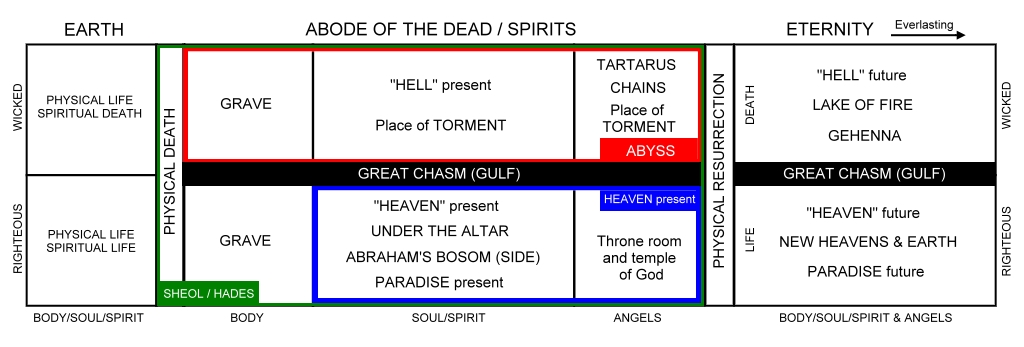
Luke 16:22, 23, Lazarus is stated to enjoy after his death the bliss of immortality in the bosom of Abraham, whilst the rich man, who indulged in the pleasures of this world, is to suffer the torments of hell. It is further said, that there subsists an infinite distinction between the abode of glory and that of perdition.

According to this account, it does not appear that either Abraham or Lazarus were after their death doomed to the punishment of hell, although the alleged work of the redemption of mankind had not yet been achieved by Jesus. We are therefore at a loss to know what the Christians mean by salvation wrought by Jesus, and what can be the danger of the original sin, when we see that it did not affect those who died unredeemed. 
 Let's take a look at the parable in Luke 16 in its entirety.

There was a rich man who was clothed in purple and fine linen and who feasted sumptuously every day. And at his gate was laid a poor man named Lazarus, covered with sores, who desired to be fed with what fell from the rich man's table. Moreover, even the dogs came and licked his sores.

The poor man died and was carried by the angels to Abraham's side. The rich man also died and was buried, and in Hades, being in torment, he lifted up his eyes and saw Abraham far off and Lazarus at his side.

And he called out, ‘Father Abraham, have mercy on me, and send Lazarus to dip the end of his finger in water and cool my tongue, for I am in anguish in this flame.’ But Abraham said, ‘Child, remember that you in your lifetime received your good things, and Lazarus in like manner bad things; but now he is comforted here, and you are in anguish. And besides all this, between us and you a great chasm has been fixed, in order that those who would pass from here to you may not be able, and none may cross from there to us.’

And he said, ‘Then I beg you, father, to send him to my father's house—for I have five brothers—so that he may warn them, lest they also come into this place of torment.’ But Abraham said, ‘They have Moses and the Prophets; let them hear them.’ And he said, ‘No, father Abraham, but if someone goes to them from the dead, they will repent.’ He said to him, ‘If they do not hear Moses and the Prophets, neither will they be convinced if someone should rise from the dead.’

(Luke 16:19-31) 
 The main point of the parable is the ending. Those who do not pay attention to the teachings of God will not turn around and obey simply on the basis of seeing a miracle. Not even the resurrection of Jesus is enough to convince many people to follow him. This story also addresses objections by skeptics today. New Atheists often say that they would believe in God if only they would be shown a miracle.

Sure, they might believe in God, but mere belief is not enough. Even the demons believe in God. What God wants is not mere belief, but humble submission to his will. The Egyptians saw the open miracles performed by God, and yet did not repent. Their hearts were still hard, and they paid the ultimate price for it. God has provided enough evidence that those who are actively and humbly seeking him out will find him, while those who are not doing so, will likely not find him.

But to answer Troki's question, salvation was available to people before the time of Jesus because the faith of the people in God's redemption was counted to them as faith in Jesus. The abode of the dead is a temporary place until the final resurrection and judgment at the end of the world. This belief long preceded Christianity, having its origins probably in early Second Temple Judaism.

As far as Troki's objections about those who die unredeemed, remember that the salvation brought about by Jesus is ultimately for the final judgment at the end of the world.

Wednesday, November 5, 2014

Chizuk Emunah (Pt 2) Under the Microscope: Chapter 38

Luke 11:37-41, "And he [Jesus] went in and sat down to meat, and when the Pharisees saw it, they marvelled that he [Jesus] had not first washed before dinner." To this expression of purpose Jesus responded, "Now do ye Pharisees make clean the outside of the cup and the platter; but your inward part is full of ravening and wickedness. Ye fools, did not he that made that which is without make that which is within also? But rather give alms of such things as ye have, and behold all things are clean unto you."

These arguments are merely quoted here, to show how illogical some of the replies are, which are put into the mouth of the assumed Son of God.

The negligent, and those who are indifferent to cleanliness, might screen themselves under such dicta; plain sense, however, would have suggested an answer of a different character. Other sayings of similar inconsistency in the replies of Jesus are recorded in the book of Matthew. 
This is similar to the passage in Matthew, where the disciples of Jesus were accused of eating with unwashed hands. Remember that this is not hygienic handwashing, but the ritual handwashing required of priests before eating bread. The Pharisees expanded this law as an anti-assimilation measure. It was also part of the Pharisees' agenda to bring equality to the classes of Israel, which is why they were so popular with the masses.

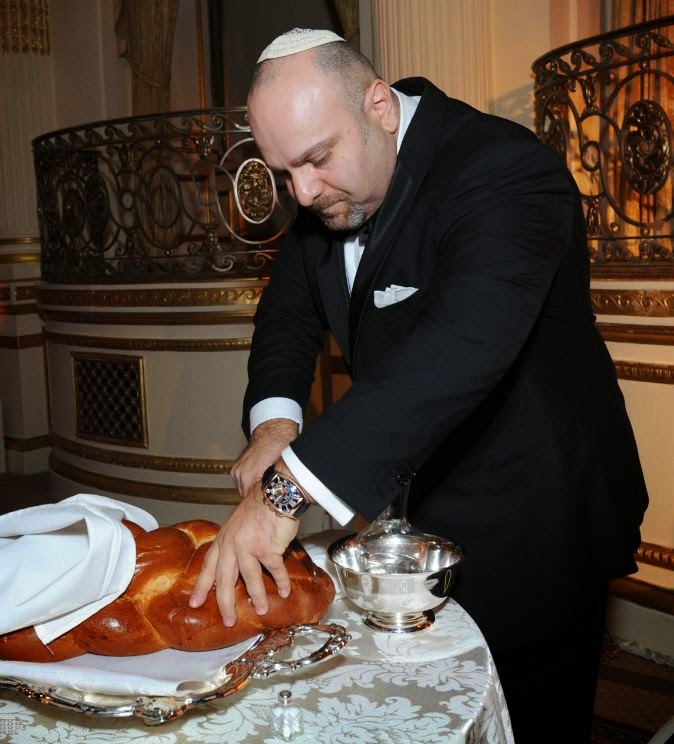
So, for these two reasons, the Pharisees performed the ritual handwashing that had previously been reserved only for the priests. This is why Judaism today has handwashing before eating bread. It is also why the rabbis pour salt over the bread at the table. The table is supposed to represent the altar, and the bread is supposed to represent a sacrifice. Again, part of the Pharisaic program of bringing priestly duties into the home of the ordinary Jews.


Jesus simply pointed out that many of the Pharisees were following their religious duties to an extreme extent while exploiting others behind their backs. This kind of hypocrisy happens today, for example, pedophilia is frighteningly common in Hasidic communities today. Christopher Ketchum writes:

On a visit to Jerusalem in 2005, Rabbi Rosenberg entered into a mikvah in one of the holiest neighborhoods in the city, Mea She’arim. “I opened a door that entered into a schvitz,” he told me. “Vapors everywhere, I can barely see. My eyes adjust, and I see an old man, my age, long white beard, a holy-looking man, sitting in the vapors. On his lap, facing away from him, is a boy, maybe seven years old. And the old man is having anal sex with this boy.”

Rabbi Rosenberg paused, gathered himself, and went on: “This boy was speared on the man like an animal, like a pig, and the boy was saying nothing. But on his face—fear. The old man [looked at me] without any fear, as if this was common practice. He didn’t stop. I was so angry, I confronted him. He removed the boy from his penis, and I took the boy aside. I told this man, ‘It’s a sin before God, a mishkovzucher. What are you doing to this boy’s soul? You’re destroying this boy!’ He had a sponge on a stick to clean his back, and he hit me across the face with it. ‘How dare you interrupt me!’ he said. I had heard of these things for a long time, but now I had seen.”
 The man was outwardly following the stringencies of Orthodox Judaism, but neglected the moral law of God. Jesus was rebuking this kind of behavior.